How to Evaluate Workshop Space for a Semi Gantry Crane
menu_open
Content Quick Link
Most Important Takeaway
A semi gantry crane is not selected only by lifting capacity. The workshop structure, floor condition, movement path, obstruction layout, and future workflow expansion determine whether the crane will operate safely, efficiently, and economically.
- Workshop width, height, and usable lifting zone are critical selection factors.
- Floor bearing capacity directly affects wheel load safety and rail design.
- Obstructions such as columns, machines, pits, and pipelines can limit crane travel.
- Rail-mounted and rail-free semi gantry cranes require different floor evaluations.
- Load movement direction and production workflow strongly influence crane layout.
- Future expansion plans should be considered before fixing crane runway positions.
- Electrical power supply and cable management affect installation complexity.
- Incorrect workshop assessment can lead to crane instability, reduced lifting coverage, and costly modifications.
Introduction
What Is a Semi Gantry Crane?
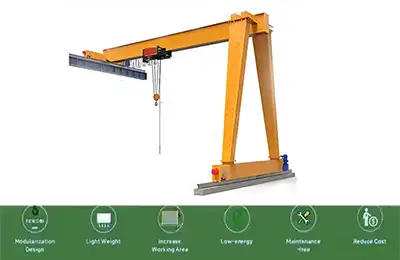
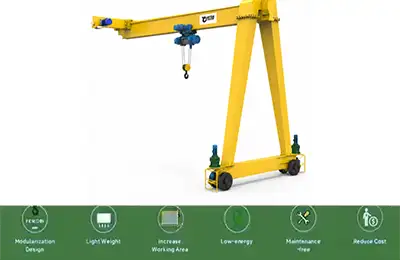
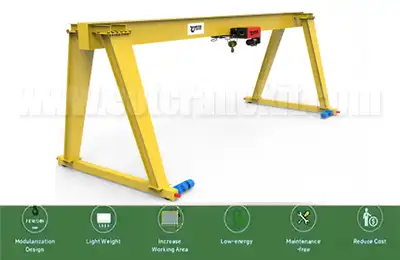
A semi gantry crane is a lifting system with one side running on an elevated runway beam and the other side supported by ground-traveling legs. It combines features of an overhead bridge crane and a gantry crane, making it suitable for workshops where full overhead runway support is not available.
Semi gantry cranes are commonly used in:
- Steel fabrication workshops
- Machine manufacturing plants
- Mold handling areas
- Warehouses
- Equipment maintenance shops
- Assembly lines
Many buyers choose a semi gantry crane because it reduces workshop structural modification while still providing efficient material handling.
Common search terms include:
- semi gantry crane for workshop
- indoor semi gantry crane
- rail mounted semi gantry crane
- trackless semi gantry crane
- semi gantry crane system
Before buying, workshop space must be checked carefully. Floor condition, roof height, column spacing, and machine layout all affect crane installation and operation.
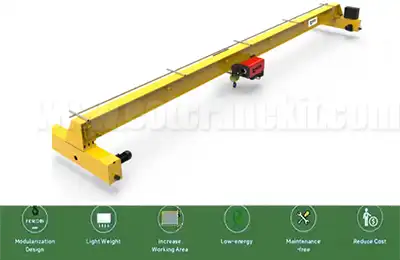
Difference Between Semi Gantry Cranes and Overhead Bridge Cranes
An overhead bridge crane runs completely on elevated runway beams installed on both sides of the workshop. It does not touch the floor.
A semi gantry crane uses one elevated runway beam while the opposite side travels on the floor using wheels and supporting legs.
Overhead Bridge Crane
- Requires two runway beams
- Fully supported by building structure
- Keeps floor area open
- Suitable for continuous production lines
Semi Gantry Crane
- Requires only one runway beam
- One side transfers load directly to the floor
- Lower structural modification cost
- Suitable for older or limited-structure workshops
Semi gantry cranes are often selected for:
- Rented workshops
- Retrofit factory projects
- Expansion production areas
- Buildings with weak structural support on one side
Difference Between Semi Gantry Cranes and Full Gantry Cranes
A full gantry crane uses supporting legs on both sides and travels completely on ground rails or wheels. It works independently from the building structure.
A semi gantry crane uses only one ground-supported leg, while the opposite side runs on an elevated beam.
Full Gantry Crane
- Two supporting legs
- Usually used outdoors
- Requires larger ground operating area
- Common in stockyards and shipyards
Semi Gantry Crane
- One supporting leg
- Better for indoor workshops
- Saves floor space
- Integrates with existing buildings
Semi gantry cranes are more suitable for compact workshops where floor space and machine access are important.
Typical Configurations of Semi Gantry Cranes (Workshop-Oriented Selection Guide)
Semi gantry crane systems are not a single standard design. In real industrial workshops, the configuration changes based on lifting capacity, space conditions, material flow, and whether the operation is fixed or flexible. The most common options include single girder, double girder, rail mounted, and rail-free semi gantry crane systems, each suited to different workshop constraints.
The configurations helps avoid wrong selection, especially in half gantry crane and single leg gantry crane applications where floor, column layout, and travel path strongly influence performance.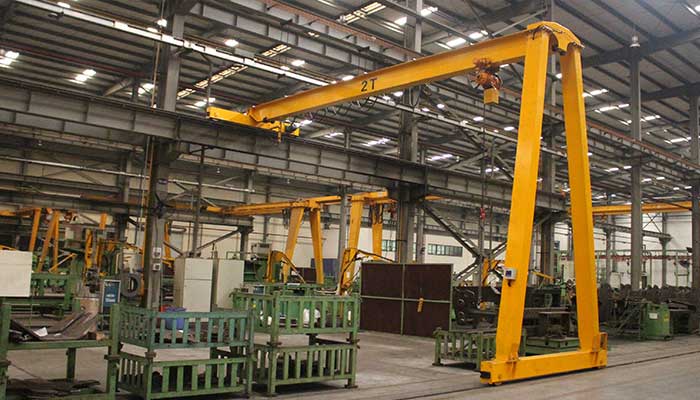
Single Girder Semi Gantry Crane (Light to Medium Duty Workshop Solution)
A single girder semi gantry crane uses one main beam with an electric hoist running underneath or on the beam. It is widely used in compact workshops where space, cost, and floor load limitations are key factors.
Typical capacity range includes:
- 1 ton
- 2 ton
- 3 ton
- 5 ton
- 10 ton
Main features
- Lower overall crane weight reduces floor and foundation pressure
- Lower installation cost compared to double girder systems
- Reduced wheel load, suitable for weaker or older workshop floors
- More suitable for low-height workshops with limited headroom
- Easier integration into semi gantry crane workshop layouts
Common applications
- Warehouses and storage yards
- Small fabrication and welding workshops
- Maintenance and repair facilities
- General manufacturing plants with light lifting demand
This configuration is often selected when workshop space is limited and lifting requirements are moderate but frequent.
Double Girder Semi Gantry Crane (Heavy Duty Industrial Configuration)
A double girder semi gantry crane uses two main girders with a trolley system running on top rails. It is designed for heavier loads and more demanding industrial operations where stability and lifting height are critical.
Main features
- Higher lifting capacity for heavy industrial loads
- Strong structural rigidity and reduced deflection
- Greater lifting height due to top-running trolley design
- Suitable for long span semi gantry crane applications
- Better performance in high-frequency lifting cycles
Typical applications
- Steel structure handling and fabrication plants
- Heavy equipment assembly workshops
- Mold and die transfer operations
- Large-scale industrial production lines
Common capacities include:
- 15 ton
- 20 ton
- 30 ton semi gantry crane systems
Because of higher wheel loads and structural stress, floor strength evaluation becomes a critical part of workshop planning for this configuration.
Rail Mounted Semi Gantry Crane (Fixed Path Industrial System)
A rail mounted semi gantry crane operates on fixed rails installed along the workshop floor or runway beam system. It is designed for stable, repetitive material handling where production flow is consistent.
Advantages
- Stable and predictable travel movement
- High positioning accuracy for loading and unloading
- Suitable for heavy duty and long-term production use
- Reduced wheel wear due to guided travel path
- Efficient for repetitive material handling cycles
Typical applications
- Steel fabrication production lines
- Industrial manufacturing workshops
- Machine processing facilities
- Structured assembly line operations
In this system, floor and foundation design must support rail installation and long-term concentrated wheel loads, making early structural evaluation essential.
Rail-Free Semi Gantry Crane (Trackless Flexible Workshop Solution)
A rail-free semi gantry crane, also known as a trackless semi gantry crane, travels directly on a reinforced concrete floor without embedded rails. It is widely used in flexible or changing workshop environments.
Advantages
- Faster installation with no rail construction required
- Lower civil engineering cost compared to rail systems
- High flexibility for changing workshop layouts
- Easy relocation within or between workshops
- Suitable for rented or temporary industrial spaces
Typical applications
- Flexible production workshops
- Maintenance and repair facilities
- Multi-zone material handling areas
- Small to medium industrial workshops with changing layouts
Although rail-free systems offer flexibility, the concrete floor must still have sufficient strength and flatness to prevent:
- Wheel slipping during movement
- Uneven crane travel paths
- Premature floor wear or cracking
Summary: Selecting the Right Semi Gantry Crane Configuration
Choosing between single girder, double girder, rail mounted, or rail-free semi gantry crane systems depends directly on workshop space conditions and operational requirements.
Key decision factors include:
- Floor strength and condition
- Workshop layout and column spacing
- Load capacity and material size
- Production frequency and workflow stability
- Future expansion and flexibility needs
A correct configuration choice ensures stable operation, lower long-term cost, and better adaptation to real industrial working conditions in semi gantry crane, half gantry crane, and single leg gantry crane applications.
Why Workshop Space Evaluation Matters Before Buying a Semi Gantry Crane
Before installing a semi gantry crane, half gantry crane, or single leg gantry crane, the workshop itself must be evaluated carefully. Many crane problems do not come from the crane design. They come from limited floor space, poor concrete conditions, blocked travel paths, or incorrect lifting coverage planning.
A proper workshop assessment helps buyers select the correct crane span, lifting height, wheel configuration, and runway arrangement before production starts.
For indoor material handling systems, workshop space evaluation directly affects:
Crane installation feasibility, Floor loading safety, Lifting efficiency, Operator safety, Future workshop expansion, Long-term maintenance costs
Preventing Installation Conflicts
A semi gantry crane may technically fit inside a workshop, but actual installation can still become difficult because of:
- Steel columns
- Machine foundations
- Pipes and cable trays
- Ventilation ducts
- Low roof beams
- Existing overhead crane systems
This is especially common when installing a half gantry crane in older factory buildings or retrofit workshops.
Checking the workshop layout early helps avoid:
- Crane span redesign
- Runway relocation
- Site modification delays
- Rework during installation
Ensuring Safe Crane Operation
Safe crane movement depends heavily on available operating space. A single leg gantry crane needs enough clearance for:
- Trolley travel
- Hook lifting movement
- Load swing control
- Operator visibility
- Emergency stopping distance
If the workshop is too narrow or congested, the crane may create collision risks with machines, walls, or stored materials.
For heavy duty semi gantry crane systems, safe floor loading and stable wheel travel are also critical.
Reducing Civil Construction Costs
Many buyers focus only on the semi gantry crane price at the beginning. Later, they discover the workshop requires:
- Concrete reinforcement
- Rail foundation construction
- Additional steel columns
- Floor leveling work
- Building modification
These costs can become higher than expected.
A proper site evaluation helps determine whether a:
- Rail mounted semi gantry crane
- Trackless semi gantry crane
- Indoor half gantry crane
is more suitable for the workshop condition.
Improving Material Handling Efficiency
Good crane layout planning improves material flow inside the workshop.
A properly positioned semi gantry crane can reduce:
- Forklift travel distance
- Manual handling time
- Machine loading delays
- Material congestion
This matters a lot in:
- Steel fabrication workshops
- Mold handling plants
- Machine assembly lines
- Warehouse loading areas
The lifting path should match the actual production flow, not just the available empty space.
Avoiding Underutilized Lifting Coverage
Sometimes buyers install a semi gantry crane with a large rated capacity, but the actual hook coverage becomes limited because of:
- Building columns
- Low ceiling areas
- Machine interference
- Restricted hook approach distance
As a result, part of the workshop becomes unreachable.
This problem is common in indoor single leg gantry crane installations where workshop dimensions were not checked carefully before crane selection.
Supporting Future Production Expansion
Workshop layouts often change over time. Machines may be relocated, production lines expanded, or heavier materials introduced later.
A good semi gantry crane layout should leave room for:
- Future runway extension
- Increased lifting capacity
- Additional workstations
- Multi-area material handling
This is one reason many factories now choose flexible rail-free semi gantry crane systems for expandable workshops.
Basic Space Requirements of a Semi Gantry Crane
Minimum Workshop Width Requirements
Workshop width is one of the first things that should be checked before selecting a semi gantry crane, half gantry crane, or single leg gantry crane. Even if the lifting capacity is correct, limited width can restrict crane movement, hook coverage, and safe operation.
For indoor semi gantry crane systems, usable width matters more than total building width. Columns, machines, storage racks, and walkways all reduce the actual working space available for crane travel.
Crane Span Calculation
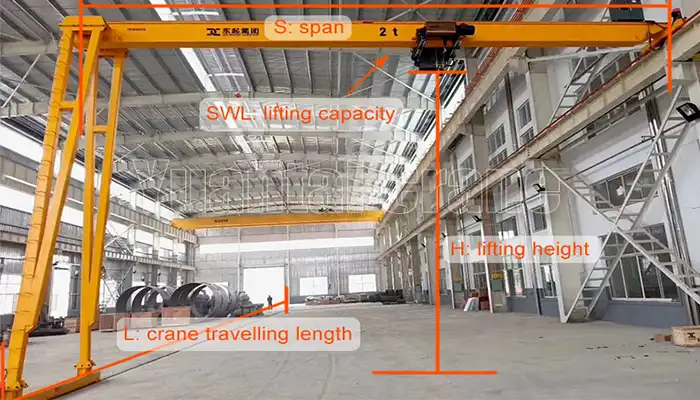
The crane span refers to the distance between the elevated runway side and the ground-traveling leg side.
A proper semi gantry crane span calculation should consider:
- Actual lifting area width
- Distance between building columns
- Machine layout
- Safe hook movement area
- Future production changes
Choosing an oversized span increases:
- Crane self-weight
- Wheel loads
- Structural stress
- Crane cost
Choosing a span that is too small may leave part of the workshop unreachable.
For many workshop semi gantry crane projects, the ideal span is not the maximum possible span. It is the span that provides enough lifting coverage while keeping wheel loads and structural costs reasonable.
Required Side Clearances
A semi gantry crane needs safe clearance on both sides during operation.
Side clearance space is required for:
- Crane wheel movement
- Trolley travel safety
- Load swing control
- Maintenance access
- Emergency stopping
Typical clearance areas include:
- Distance between crane leg and wall
- Distance between girder and roof structure
- Clearance beside machines and workstations
Insufficient side clearance may lead to:
- Collision risks
- Restricted crane travel
- Difficult maintenance access
- Unsafe operator movement
This issue appears often in narrow indoor workshops using rail mounted semi gantry cranes.
Safe Distance From Walls and Equipment
The crane should never operate too close to fixed workshop structures.
Safe spacing helps prevent:
- Load impact against machines
- Hook collision with walls
- Restricted operator visibility
- Swinging material accidents
Particular attention should be given to:
- CNC equipment
- Welding stations
- Storage racks
- Hydraulic presses
- Assembly platforms
For trackless semi gantry cranes, turning movement and wheel path clearance also need to be considered carefully.
Impact of Narrow Workshops on Crane Design
Narrow workshops create additional design limitations for half gantry crane systems.
In compact factory buildings, buyers may need to use:
- Single girder semi gantry cranes
- Low headroom electric hoists
- Reduced wheelbase designs
- Compact trolley configurations
A narrow workshop may also limit:
- Hook approach distance
- Trolley travel range
- Load turning space
- Crane maintenance access
In some cases, a rail-free single leg gantry crane becomes more practical than a larger fixed rail system because it offers more layout flexibility.
Workshop Height Evaluation
Workshop height directly affects lifting performance, hook travel, and crane configuration selection.
Many buyers only check total building height. But for semi gantry crane installation, usable lifting height is what actually matters.
Roof beams, lighting systems, ventilation ducts, and suspended pipelines often reduce the available lifting space.
Clear Lifting Height
Clear lifting height refers to the actual vertical space available for lifting materials safely.
This includes the distance between:
- Workshop floor
- Lowest roof obstruction
- Crane hook lowest position
- Maximum lifting point
A proper lifting height evaluation helps determine:
- Hoist type
- Girder structure
- Trolley arrangement
- Crane headroom design
This becomes especially important when handling:
- Tall equipment
- Steel structures
- Mold assemblies
- Vertical machine components
Hook Travel Requirements
The hook must move high enough to lift and transfer materials safely.
When evaluating hook travel for a semi gantry crane system, buyers should consider:
- Maximum load height
- Lifting clearance above machines
- Truck loading height
- Material stacking height
Insufficient hook travel can slow production and reduce usable crane capacity.
For example, a 10 ton semi gantry crane may have enough lifting capacity but still fail operationally if the hook cannot clear tall machinery.
Headroom Limitations
Headroom refers to the vertical space occupied by the crane itself.
Different crane designs require different headroom dimensions.
Typical examples include:
- Single girder semi gantry crane
- Double girder semi gantry crane
- Low headroom electric hoist systems
Low workshop roofs often require compact crane configurations to maximize lifting height.
Headroom limitations are common in:
- Old factory buildings
- Retrofit workshops
- Warehouse conversions
- Maintenance facilities
Roof Beam Interference
Roof support beams may block trolley travel or reduce hook lifting range.
During workshop evaluation, buyers should check for:
- Low roof trusses
- Cross beams
- Suspended structures
- Steel reinforcement members
Ignoring roof beam interference can create lifting dead zones where materials cannot be raised fully.
Ventilation Duct and Lighting Obstruction Checks
Ventilation systems and lighting fixtures are frequently overlooked during crane planning.
Common obstructions include:
- Air ducts
- Exhaust systems
- Cable trays
- Hanging lights
- Fire sprinkler systems
These structures can interfere with:
- Crane girder travel
- Hook movement
- Load rotation
- Maintenance access
For indoor half gantry crane projects, ceiling obstruction checks should always be included in the layout review.
Crane Travel Length Requirements
Travel length determines how far the semi gantry crane can move along the workshop.
This affects overall lifting coverage, production flow, and material handling efficiency.
Total Runway Travel Distance
The total runway length should cover all required lifting zones.
This usually includes:
- Raw material loading areas
- Machine feeding stations
- Assembly areas
- Storage sections
- Finished product handling zones
A semi gantry crane with insufficient travel length may require extra forklift handling, increasing labor and transport time.
Loading and Unloading Zones
The crane should fully reach all material transfer points.
Important handling zones may include:
- Truck loading bays
- Warehouse entrances
- Machine loading stations
- Maintenance platforms
When planning a workshop semi gantry crane layout, load transfer efficiency is just as important as lifting capacity.
Buffer Zones at Both Ends
Semi gantry cranes require safe stopping space at the ends of the runway.
Buffer zones help protect:
- Crane structure
- End stops
- Travel motors
- Workshop walls
Without sufficient stopping distance, crane impact forces may damage both the crane and the building structure.
Future Extension Considerations
Production lines often expand later.
When planning runway travel length, buyers should consider:
- Future workshop extension
- Additional workstations
- Increased material flow
- Heavier production demand
Some rail mounted semi gantry crane systems can be designed with future runway extensions already reserved.
This helps reduce later modification costs.
Evaluating Usable Working Area
Total workshop size and actual usable lifting area are not always the same.
Machines, columns, storage racks, and structural obstacles may reduce the crane's effective working zone.
Effective Lifting Coverage vs Total Workshop Area
The crane should provide lifting access to the areas where material handling actually takes place.
A proper semi gantry crane layout focuses on:
- Real production workflow
- Hook accessibility
- Material transfer paths
- Operator movement space
Large workshop size alone does not guarantee efficient lifting coverage.
Dead Zones Caused by Columns or Machinery
Dead zones are areas where the crane hook cannot operate properly.
Common causes include:
- Structural columns
- Tall machines
- Storage systems
- Partition walls
- Fixed platforms
Dead zones reduce operational efficiency and may force workers to use additional handling equipment.
This is a common problem in retrofit half gantry crane installations.
Areas Inaccessible to the Hook
Some workshop sections may fall outside the actual hook operating range because of:
- Limited trolley travel
- Hook approach restriction
- Low roof clearance
- Crane leg interference
Before buying a single leg gantry crane or indoor semi gantry crane, buyers should confirm that all critical lifting points are fully reachable during operation.
Evaluating Workshop Floor Conditions
Floor Bearing Capacity Analysis
Floor condition is one of the most important parts of semi gantry crane planning. A workshop may look structurally solid, but the floor still may not safely support crane wheel loads over long-term operation.
This is especially important for:
Semi gantry cranes, Half gantry cranes, Single leg gantry cranes, Rail mounted gantry systems, Trackless semi gantry cranes
Many buyers focus mainly on crane lifting capacity while overlooking floor pressure. In reality, wheel loads are transferred directly into the concrete floor and foundation. If the floor is weak, problems usually appear after installation.
Typical issues include: Floor cracking, Rail misalignment, Uneven crane travel, Wheel vibration, Concrete surface damage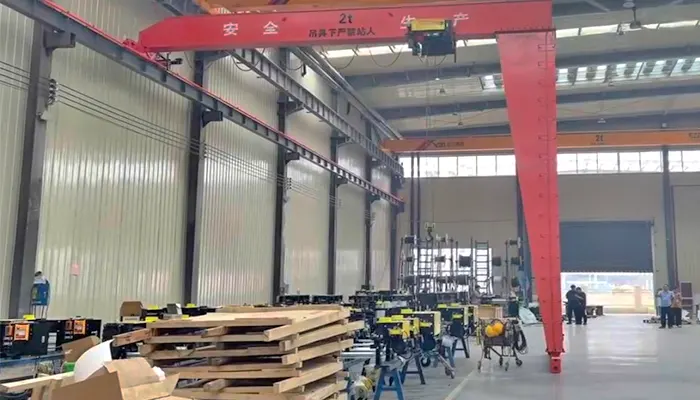
Static Wheel Load vs Dynamic Wheel Load
Semi gantry crane floors must withstand both static and dynamic wheel loads.
Static wheel load refers to the pressure created when the crane and load remain stationary.
Dynamic wheel load occurs during:
- Crane travel
- Trolley movement
- Acceleration and braking
- Load lifting and lowering
- Sudden load swing
Dynamic loads are usually higher than static loads because crane movement creates impact force.
For heavy duty semi gantry crane systems, dynamic loading becomes a major factor in:
- Floor reinforcement design
- Rail beam sizing
- Wheel selection
- Concrete thickness requirements
Point Load Concentration
A semi gantry crane transfers large concentrated loads through relatively small wheel contact areas.
This creates high point load pressure on the floor.
Point load concentration becomes more severe in:
- Double girder semi gantry cranes
- High capacity half gantry cranes
- Narrow wheelbase designs
- Small diameter wheel systems
Without proper reinforcement, concentrated wheel loads may eventually damage the concrete floor surface.
Typical warning signs include:
- Surface spalling
- Crushed concrete edges
- Wheel track marks
- Floor depressions
Concrete Compressive Strength
Concrete strength determines whether the floor can safely support repeated crane travel.
For indoor semi gantry crane applications, important factors include:
- Concrete grade
- Slab thickness
- Reinforcement density
- Concrete aging condition
- Existing floor damage
Older workshops often have unknown floor specifications. In many retrofit crane projects, floor core testing may be needed before finalizing the crane design.
Concrete evaluation is especially important for:
- 10 ton semi gantry cranes
- 15 ton half gantry cranes
- Long span gantry crane systems
Soil Settlement Considerations
Even when the concrete slab appears strong, unstable soil underneath can still create long-term problems.
Uneven settlement may cause:
- Crane rail deviation
- Wheel load imbalance
- Structural twisting
- Abnormal crane vibration
Settlement risks are higher in:
- Filled ground areas
- Poor drainage zones
- Old industrial sites
- Workshops with underground utility trenches
For rail mounted semi gantry crane systems, foundation stability is critical because even small settlement changes can affect rail alignment.
Rail Mounted Semi Gantry Crane Floor Requirements
A rail mounted semi gantry crane runs on fixed rails installed directly onto the workshop floor or reinforced runway beams.
Compared with rail-free systems, rail mounted designs require more precise floor preparation and structural support.
These cranes are commonly used in:
Steel fabrication plants, Machine manufacturing workshops, Heavy assembly lines, Long travel material handling systems
Embedded Rail Foundations
Rail mounted semi gantry cranes usually require embedded steel rails fixed into concrete foundations.
The rail foundation must safely transfer:
- Crane self-weight
- Wheel pressure
- Dynamic travel loads
- Impact loading during braking
Proper foundation design helps prevent:
- Rail movement
- Uneven wheel loading
- Crane skewing
- Excessive vibration
For heavy duty half gantry crane systems, reinforced runway beams are often required beneath the rail.
Rail Alignment Tolerances
Rail alignment accuracy directly affects crane travel stability.
Poor alignment may cause:
- Wheel flange wear
- Abnormal motor load
- Crane drifting
- Noise and vibration
- Reduced wheel lifespan
Important alignment checks include:
- Rail straightness
- Elevation consistency
- Gauge distance accuracy
- Parallelism between travel paths
Even small alignment errors can create long-term operating problems for indoor semi gantry crane systems.
Reinforced Concrete Beam Requirements
Many rail mounted semi gantry crane installations use reinforced concrete beams beneath the runway rails.
These beams help distribute concentrated wheel loads more evenly.
Beam design depends on:
- Crane capacity
- Span length
- Wheel load distribution
- Travel frequency
- Soil bearing condition
Heavy cranes with frequent operation cycles usually require stronger reinforcement structures.
Expansion Joint Considerations
Workshop expansion joints are often overlooked during crane planning.
If crane rails cross unstable expansion joints, problems may occur later, including:
- Rail displacement
- Wheel impact shock
- Uneven crane travel
- Premature rail wear
During layout planning, the runway path should avoid weak expansion joint areas whenever possible.
Rail-Free Semi Gantry Crane Floor Requirements
A rail-free semi gantry crane, also called a trackless semi gantry crane, travels directly on the workshop concrete floor without embedded rails.
This design reduces installation work and offers better layout flexibility, but the floor still must meet certain operating requirements.
Direct Wheel Travel on Concrete Floor
Unlike rail mounted systems, wheel pressure is transferred directly onto the floor surface.
This means the concrete slab must handle:
- Repetitive wheel travel
- Dynamic turning forces
- Braking pressure
- Long-term rolling wear
For heavy indoor half gantry crane applications, floor durability becomes very important.
Surface Flatness Requirements
Uneven floors can seriously affect crane stability.
Poor surface flatness may cause:
- Uneven wheel loading
- Crane vibration
- Trolley misalignment
- Travel instability
- Increased wheel wear
Trackless single leg gantry cranes usually require smoother floors than many buyers expect.
Even small floor height differences may affect crane movement over long travel distances.
Anti-Slip Considerations
Semi gantry crane wheels need proper traction during travel and braking.
Slippery floor conditions may create:
- Travel instability
- Wheel slipping
- Reduced braking performance
- Unsafe load handling
Anti-slip evaluation becomes important in workshops with:
- Oil exposure
- Coolant leakage
- Wet processing operations
- Polished concrete surfaces
Floor Wear Caused by Repetitive Travel
Repeated crane travel can gradually damage the floor surface over time.
Common wear problems include:
- Wheel track grooves
- Surface polishing
- Concrete dust generation
- Surface cracking
High-frequency semi gantry crane systems may require:
- Hardened floor surfaces
- Reinforced travel paths
- Specialized wheel materials
to reduce long-term floor deterioration.
Common Floor Problems
Workshop floor issues are very common in retrofit semi gantry crane projects. Many existing industrial floors were not originally designed for crane wheel loading.
A floor inspection should always be performed before selecting the crane configuration.
Cracked Concrete
Floor cracks may indicate:
- Weak reinforcement
- Excessive loading
- Soil movement
- Aging concrete
Heavy wheel pressure can enlarge existing cracks quickly after crane installation.
Uneven Settlement
Uneven floor settlement may cause:
- Rail alignment problems
- Crane wheel imbalance
- Structural stress concentration
- Irregular travel movement
Settlement issues often become more visible after continuous crane operation.
Weak Expansion Joints
Poor expansion joints may fail under repetitive wheel loading.
Common problems include:
- Joint edge breakage
- Concrete separation
- Rail instability
- Wheel impact damage
Expansion joint condition is especially important for long travel rail mounted semi gantry crane systems.
Oil-Contaminated Surfaces
Oil-contaminated concrete reduces wheel traction and increases slipping risk.
This is common in:
- Machine repair workshops
- Hydraulic equipment plants
- Automotive maintenance facilities
For trackless semi gantry crane systems, contaminated floors may affect braking performance and travel safety.
Poor Drainage Areas
Water accumulation can weaken floor performance over time.
Poor drainage may lead to:
- Concrete deterioration
- Corrosion
- Surface erosion
- Reduced wheel traction
Drainage problems should be corrected before installing a rail-free or rail mounted half gantry crane system.
Checking Workshop Structural Constraints for Semi Gantry Crane Installation
Workshop structural conditions directly decide whether a semi gantry crane, half gantry crane, or single leg gantry crane can operate safely and at full working coverage. In real industrial projects, many limitations do not come from crane design, but from building structure conflicts that reduce lifting range, create travel restrictions, or increase collision risk.
A proper evaluation focuses on columns, roof structure, access openings, and underground conditions before final crane layout is confirmed.
Existing Building Columns (Impact on Semi Gantry Crane Span and Travel Path)
Building columns are a key control factor in semi gantry crane span design and workshop lifting coverage. The column grid often defines where the crane runway can be installed and how the single leg gantry crane will travel inside the workshop.
Column Spacing Limitations
Column spacing directly affects:
- Semi gantry crane span selection and runway alignment
- Half gantry crane lifting coverage efficiency
- Single leg gantry crane travel corridor width
- Hook access to machines, storage zones, and assembly stations
When column spacing is tight, the crane may require a reduced span or offset runway design. This is common in older steel structure workshops where the original layout was not designed for overhead or semi gantry crane systems.
Collision Risk Evaluation in Real Operation
Collision risk is not only about static clearance, but also dynamic movement of load and trolley.
Key risk points include:
- Crane leg passing near structural columns
- Swinging load hitting column edges during rotation
- Trolley approaching column-side machines
- Reduced operator visibility in narrow aisles
In compact workshops, rail-free semi gantry crane systems or reduced-span half gantry cranes are often selected to control movement zones and reduce interference with structural elements.
Influence on Crane Span and Layout Optimization
Column layout directly controls whether the crane is efficient or restricted.
Practical design adjustments include:
- Optimizing semi gantry crane span to avoid dead zones
- Shifting runway beam alignment to open working corridors
- Using compact single girder semi gantry crane for narrow column grids
- Reducing unnecessary span to lower wheel load and floor stress
In workshop planning, span is not only a dimension—it defines usable lifting geometry.
Roof and Structural Beam Interference (Vertical Clearance for Semi Gantry Crane Lifting)
Roof structure limitations often reduce actual lifting height more than expected, especially in indoor semi gantry crane and half gantry crane installations.
Even when total building height is sufficient, usable hook height may be restricted by internal structures.
Roof Truss Limitations and Headroom Restriction
Roof trusses can limit:
- Maximum hook lifting height of semi gantry crane systems
- Trolley running clearance in double girder configurations
- Vertical movement of long materials such as steel beams and molds
Low headroom workshops often require:
- Low headroom hoist design
- Single girder semi gantry crane with compact trolley
- Reduced structural height gantry crane configuration
This is common in retrofit factory crane installations where the building was not originally designed for lifting systems.
Suspended Pipelines and Cable Tray Interference
Many workshops include overhead utility systems that interfere with crane travel paths.
Typical obstacles include:
- Air supply pipelines
- Electrical cable trays
- Fire protection pipelines
- Hydraulic or gas lines
- Ventilation duct systems
These elements can reduce:
- Hook lifting range in semi gantry crane operation
- Safe trolley movement zone
- Load rotation clearance for long materials
In half gantry crane layouts, utility relocation is often required before installation.
Lighting System Interference and Visibility Limits
Improper lighting placement affects both safety and operation efficiency.
Common issues include:
- Hanging lights blocking crane girder travel
- Poor visibility during single leg gantry crane operation
- Shadow zones affecting load positioning accuracy
Lighting and crane layout must be coordinated to maintain safe material handling paths.
Door and Access Openings (Material Flow for Semi Gantry Crane Operation)
Door size and access layout determine how materials move in and out of the semi gantry crane working zone. This directly affects production flow efficiency and crane usability.
Material Entry and Exit Path Planning
Before installing a semi gantry crane or half gantry crane system, material flow direction must be clear:
- Raw material unloading path
- Finished product exit route
- Forklift and truck coordination zones
- Internal transfer between machines and stations
If access paths are misaligned, crane capacity cannot be fully used even if lifting parameters are correct.
Crane Clearance Near Workshop Doors
Door clearance affects both vertical and horizontal crane movement.
Key checks include:
- Door height vs maximum hook lifting height
- Door width vs load size for steel structures or machinery
- Crane leg passing clearance near door frames
In rail mounted semi gantry crane systems, end travel buffer zones near doors are essential to avoid impact damage.
Outdoor-to-Indoor Transfer Requirements
Many semi gantry crane systems operate across indoor and outdoor zones.
Important factors include:
- Transition between yard and workshop floor levels
- Weather exposure near door openings
- Alignment between outdoor rail-free gantry area and indoor runway
- Load transfer stability during entry and exit
This is especially relevant for trackless semi gantry crane systems used in flexible logistics and fabrication workshops.
Underground Utilities and Pits (Hidden Constraints for Semi Gantry Crane Foundations)
Underground structures are often overlooked but can significantly affect semi gantry crane foundation design, rail installation, and long-term stability.
Maintenance Trenches and Floor Discontinuity
Maintenance pits can weaken floor strength and reduce wheel load support.
Risks include:
- Concrete slab discontinuity under semi gantry crane wheel paths
- Localized settlement near trench edges
- Rail deformation in rail mounted gantry systems
- Uneven load distribution for single leg gantry crane travel
Proper reinforcement is required if crane travel crosses trench areas.
Utility Tunnels and Buried Pipelines
Underground systems may include:
- Electrical conduits
- Water supply pipelines
- Drainage systems
- Compressed air lines
These hidden structures can limit foundation depth and affect crane runway beam installation. In heavy duty semi gantry crane projects, rerouting may be necessary.
Foundation Instability Risks
Long-term stability issues often come from ground conditions rather than crane structure itself.
Common causes include:
- Weak or backfilled soil areas
- Water erosion under workshop slab
- Old foundation repair zones
- Uneven ground compaction
These conditions may lead to:
- Rail misalignment in rail mounted semi gantry crane systems
- Wheel load imbalance in half gantry crane operation
- Structural vibration during lifting cycles
For reliable operation, underground evaluation is required before final crane selection and installation design.
Material Handling Workflow Evaluation for Semi Gantry Crane Systems
Material handling workflow is one of the most practical factors in semi gantry crane selection. Even when a workshop has enough space and a strong floor, poor workflow planning can still reduce efficiency and limit the real working capacity of a semi gantry crane, half gantry crane, or single leg gantry crane system.
In industrial projects, crane performance is not only about lifting tonnage. It is also about how smoothly materials move between stations, how often lifting is repeated, and how well the crane integrates with production flow.
Identifying Load Movement Direction (Semi Gantry Crane Travel Path Planning)
Before selecting a semi gantry crane system, the direction of material flow inside the workshop must be clearly defined. This directly influences runway layout, crane span, and travel distance.
Linear Handling Processes
Linear workflows are the most common layout in manufacturing workshops.
Typical examples include:
- Steel fabrication lines
- Pipe cutting and welding workshops
- Assembly line production
- Machine processing flow
In linear systems, the semi gantry crane usually moves along a fixed direction, supporting step-by-step material transfer from one station to the next.
This layout allows:
- Stable crane travel path
- Reduced operator repositioning
- Faster lifting cycles
- Predictable load handling route
For these applications, rail mounted semi gantry crane systems are often preferred due to stable straight-line movement.
Multi-Station Transfer Operations
Multi-station workflows involve several lifting points inside one workshop are
Common in:
- Mold manufacturing workshops
- Machine assembly plants
- Repair and maintenance facilities
In this case, a half gantry crane or single leg gantry crane is often used to move materials between multiple working stations.
Key planning considerations include:
- Hook reach to all stations
- Safe turning and positioning space
- Avoiding interference between machines
- Flexible crane travel coverage
Poor layout planning can create "dead stations" where lifting is not possible.
Cross-Workshop Transportation
Some semi gantry crane systems are used to transfer materials across different workshop zones or between indoor and outdoor areas.
Typical scenarios:
- Yard to workshop transfer
- Storage area to production line
- Machine shop to assembly area
In these cases, a rail-free semi gantry crane or trackless gantry system may be more suitable due to flexible movement paths and fewer infrastructure limitations.
Defining Pick-Up and Drop-Off Points (Crane Working Position Layout)
Clear definition of lifting points is essential for efficient semi gantry crane operation. Without fixed pickup and drop-off positions, crane travel becomes inefficient and inconsistent.
Machine Loading Areas
Machine loading zones are the most common lifting points in industrial workshops.
These include:
- CNC machine loading positions
- Press machine feeding areas
- Cutting and welding stations
- Heavy equipment installation points
The semi gantry crane must be able to position the hook accurately above each machine without obstruction.
Storage Zones
Storage areas are used for temporary or long-term material placement.
Typical materials include:
- Steel beams and profiles
- Pipes and structural components
- Molds and dies
- Finished products awaiting shipment
For efficient handling, the crane runway should allow full access to storage zones without dead lifting areas.
Assembly Stations
Assembly zones require precise material positioning.
Key requirements include:
- Stable load placement
- Controlled lowering speed
- Accurate hook positioning
- Sufficient clearance for workers
In these zones, single leg gantry crane systems are often used due to flexible positioning and better access in compact spaces.
Evaluating Load Characteristics (Impact on Semi Gantry Crane Selection)
Load type directly affects crane structure, hoist selection, wheel design, and runway requirements.
Maximum Load Dimensions
Beyond weight, physical size is equally important.
Large or wide loads may require:
- Increased crane span
- Higher hook clearance
- Wider travel corridor
- Reduced obstruction in workshop layout
Oversized materials can limit movement even if the crane capacity is sufficient.
Long Material Handling
Long materials such as steel beams, pipes, and structural frames require special attention.
Key challenges include:
- Load swing during movement
- Limited turning radius in workshop aisles
- Collision risk with columns and machines
For these applications, semi gantry crane systems with stable travel paths are preferred over highly flexible layouts.
Irregular or Off-Center Loads
Irregular loads create uneven stress during lifting.
Common examples:
- Welded structures
- Asymmetrical machine parts
- Fabricated frames
These loads may cause:
- Load swing instability
- Uneven wheel loading on single leg gantry crane systems
- Additional stress on hoist and trolley components
Proper load balancing devices may be required in some cases.
Hot, Hazardous, or Sensitive Materials
Special material types require additional safety planning.
Examples include:
- High-temperature steel parts
- Chemical containers
- Precision equipment components
In these cases, crane speed control, braking performance, and operator visibility become critical design factors.
Frequency of Crane Usage (Duty Level and Operational Load Cycle)
Crane usage frequency directly affects equipment selection, maintenance planning, and structural design of semi gantry crane systems.
Low-Duty Workshop Applications
Low-frequency lifting is common in:
- Maintenance workshops
- Small fabrication shops
- Repair facilities
Characteristics include:
- Occasional lifting operations
- Simple travel routes
- Lower wear on crane components
In these cases, a basic single girder semi gantry crane is often sufficient.
Medium-Duty Production Lines
Medium-duty operations involve regular lifting throughout the day.
Typical applications:
- Manufacturing workshops
- Machine assembly plants
- Steel processing lines
Requirements include:
- Stable crane travel performance
- Balanced wheel load distribution
- Moderate maintenance intervals
Both rail mounted semi gantry crane and half gantry crane systems are commonly used.
High-Frequency Repetitive Lifting
High-duty cycles are found in continuous production environments.
Examples include:
- Steel fabrication plants
- Heavy manufacturing lines
- Large-scale assembly operations
Key requirements:
- Strong structural design
- Reinforced runway system
- High durability wheels and hoist
- Precise travel alignment
In these environments, semi gantry crane selection must consider long-term fatigue, not just initial lifting capacity.
Space Planning for Semi Gantry Crane Operation Safety
Safety space planning is a core part of semi gantry crane design, especially for workshop installations where cranes operate close to machines, workers, and structural obstacles. Whether it is a semi gantry crane, half gantry crane, or single leg gantry crane system, safe operation depends on clear visibility, controlled movement zones, and proper maintenance access space.
In practical industrial use, most accidents and operational delays are linked to poor spatial planning rather than crane capacity issues.
Operator Visibility Requirements (Safe Control of Semi Gantry Crane Movement)
Operator visibility directly affects how safely and accurately a semi gantry crane system can be controlled, especially in narrow or crowded workshops.
Blind Spot Analysis
Blind spots occur when the operator cannot clearly see:
- Hook position during lifting
- Load swing direction
- Crane leg movement path
- Machine proximity on travel routes
Blind spots are more common in:
- Long-span semi gantry crane systems
- Workshops with dense machine layout
- Narrow aisle half gantry crane installations
Poor visibility increases the risk of:
- Load collision with equipment
- Misalignment during placement
- Delayed reaction during emergency situations
A proper layout reduces blind zones by adjusting runway position and workstation arrangement.
Safe Operator Movement Paths
Operators must have clear walking paths that are separate from crane movement zones.
Key planning requirements include:
- Clear walkway beside semi gantry crane runway
- Safe access around single leg gantry crane columns
- Unobstructed access to control stations
- Direct path to emergency shutdown points
In real workshop conditions, blocked operator paths often reduce both efficiency and safety compliance.
Remote Control Visibility Considerations
Most modern semi gantry crane systems use pendant or wireless remote control.
Even with remote operation, visibility still matters for:
- Load positioning accuracy
- Safe lifting over machines
- Monitoring load swing behavior
- Coordinating multi-station handling
Remote control does not remove the need for clear visual contact with the working zone.
Personnel Safety Clearance (Protecting Workers in Semi Gantry Crane Working Zones)
Safety clearance planning ensures that workers are not exposed to moving loads, crane legs, or swinging materials.
Separation from Pedestrian Walkways
Workshop layouts should clearly separate:
- Crane travel paths
- Worker walking areas
- Forklift routes
- Material storage zones
In semi gantry crane workshops, mixing pedestrian and crane zones increases collision risk, especially in narrow aisles or multi-station production layouts.
Restricted Operation Zones
Certain areas should be marked as restricted during crane operation:
- Under suspended loads
- Near crane turning points
- Around machine loading areas
- Along rail mounted gantry travel lines
These zones help prevent unauthorized entry during lifting operations and reduce workplace incidents.
Emergency Stop Accessibility
Emergency stop systems must be:
- Easy to reach from operator position
- Accessible from main travel paths
- Clearly marked and unobstructed
- Functional from multiple control points
For half gantry crane systems, emergency response planning should include both ground and remote control shutdown options.
Collision Prevention Considerations (Crane and Workshop Protection Strategy)
Collision prevention is a critical part of semi gantry crane layout design, especially in workshops with machines, columns, and multiple lifting stations.
Machine-to-Crane Clearance
Adequate clearance must be maintained between crane and workshop equipment.
Key risk areas include:
- CNC machine enclosures
- Welding stations
- Large press machines
- Storage racks and steel stacks
Insufficient clearance can lead to:
- Structural damage
- Load impact accidents
- Reduced crane working efficiency
This is especially important in compact indoor semi gantry crane installations.
Multi-Crane Interference Risks
In workshops using more than one crane system, interference must be evaluated carefully.
Risks include:
- Overlapping crane travel zones
- Hook collision between cranes
- Shared runway conflicts
- Load crossing paths
Proper planning ensures independent movement zones for each semi gantry crane or single leg gantry crane system.
End Stop Protection Zones
End stop zones are required to protect both crane structure and workshop walls.
These zones help prevent:
- Over-travel accidents
- Impact damage to crane wheels
- Structural shock loads
- Runway deformation
For rail mounted semi gantry crane systems, buffer distance at both ends of travel is essential for safe operation.
Maintenance Access Space (Long-Term Operation and Service Safety)
Maintenance space is often ignored during initial workshop planning but becomes critical during long-term crane operation.
Without proper access, even a well-designed semi gantry crane system can face downtime and increased maintenance cost.
Motor Inspection Access
Crane motors must be accessible for:
- Routine inspection
- Cooling system checks
- Brake adjustment
- Replacement work
Restricted access can delay maintenance and reduce production efficiency in busy workshops.
Wheel Replacement Space
Wheels are high-wear components in semi gantry crane systems, especially in:
- High-frequency production lines
- Heavy load handling workshops
- Rail mounted gantry systems
Adequate space must be available for:
- Wheel removal tools
- Jacking equipment
- Alignment correction
- Safe handling during replacement
Without proper clearance, wheel maintenance becomes time-consuming and unsafe.
Electrical Maintenance Clearance
Electrical systems require safe and open access for servicing.
Key components include:
- Control panels
- Cable systems
- Power supply lines
- Limit switches and sensors
Maintenance clearance ensures safe troubleshooting and reduces system downtime in semi gantry crane operation.
Proper safety space planning is not optional. It directly affects how efficiently a semi gantry crane, half gantry crane, or single leg gantry crane performs in real workshop conditions over its full service life.
Comparing Rail Mounted and Rail-Free Semi Gantry Cranes for Different Workshops
Selecting between a rail mounted semi gantry crane and a rail-free semi gantry crane is mainly a workshop space decision, not only a capacity decision. In real industrial projects, floor condition, production stability, and layout flexibility determine which system performs better over time.
Both systems are widely used in semi gantry crane applications, half gantry crane installations, and single leg gantry crane workshop setups, but their space behavior is very different.
Rail Mounted Semi Gantry Crane Space Characteristics
A rail mounted semi gantry crane runs on fixed ground rails installed along a defined travel path. This creates a stable and predictable lifting route inside the workshop.
Fixed Travel Path
The crane follows a permanent straight or guided path.
Key characteristics:
- Defined crane runway alignment
- Fixed lifting corridor in workshop layout
- Stable movement between stations
- Limited deviation during travel
This is suitable for structured production lines where material flow does not change frequently.
Higher Travel Precision
Rail guidance improves positioning accuracy during operation.
Advantages include:
- Better load placement accuracy
- Reduced lateral movement during travel
- Stable hook positioning for assembly work
- Consistent movement repeatability
This is important in precision-driven workshops where semi gantry crane positioning must match machine or station alignment.
Better for Repetitive Production Layouts
Rail mounted systems perform best in fixed workflow environments such as:
- Linear fabrication lines
- Repetitive assembly operations
- Standardized material handling routes
Once installed, the system becomes part of the production flow, supporting stable and predictable operation.
Higher Civil Foundation Requirements
Rail mounted semi gantry crane systems require stronger infrastructure.
Typical requirements include:
- Reinforced concrete runway beams
- Rail embedding and alignment control
- Stable ground foundation with low settlement risk
- Precise leveling and installation tolerance
This increases initial construction effort but improves long-term operational stability.
Rail-Free Semi Gantry Crane Space Characteristics
A rail-free semi gantry crane, also known as a trackless semi gantry crane or mobile half gantry crane, runs directly on the workshop floor using wheel travel instead of fixed rails.
This design is widely used in flexible workshop environments where layout changes are frequent.
Flexible Movement
The crane is not restricted to a fixed path.
Key features:
- Adjustable travel direction within workshop space
- Ability to reposition based on production needs
- Flexible access to multiple working zones
- Suitable for irregular layouts
This is useful in workshops where material flow changes depending on project type.
Easier Workshop Adaptation
Rail-free systems require less structural preparation.
Advantages include:
- No embedded rail installation
- Reduced foundation modification
- Faster deployment in existing workshops
- Easier integration into rented or older buildings
This makes it suitable for retrofit semi gantry crane projects where civil work is limited.
Lower Infrastructure Modification
Compared to rail mounted systems, rail-free semi gantry cranes reduce:
- Rail foundation construction
- Alignment engineering work
- Ground excavation or embedding
- Long-term rail maintenance requirements
However, the concrete floor still must support wheel load pressure and repeated travel paths.
Better for Changing Layouts
Rail-free systems perform well in dynamic workshop environments.
Typical use cases:
- Changing machine layout
- Temporary production lines
- Multi-project fabrication shops
- Flexible assembly areas
Because there is no fixed track, the crane can adapt to evolving workshop needs over time.
Which Workshop Types Fit Each Design? (Practical Selection Guide)
Choosing between rail mounted and rail-free semi gantry crane systems depends on how stable or flexible the workshop operation is.
Fabrication Workshops
Fabrication workshops often handle steel cutting, welding, and assembly processes.
- Rail mounted semi gantry crane: suitable for fixed production lines
- Rail-free semi gantry crane: suitable for small batch or changing projects
For high repetition fabrication, rail systems provide better efficiency. For mixed production, rail-free systems offer better adaptability.
Warehouses
Warehouses focus on storage and material movement rather than production.
- Rail-free semi gantry crane is commonly preferred
- Flexible movement improves loading/unloading efficiency
- Easy adaptation to different storage layouts
Warehouses often benefit from mobile semi gantry crane systems due to changing storage requirements.
Mold Handling Shops
Mold workshops require careful positioning and controlled handling.
- Rail mounted semi gantry crane: better precision for fixed mold stations
- Rail-free semi gantry crane: useful for flexible mold repositioning
Because molds are heavy and high-value, stability and controlled movement are important selection factors.
Steel Structure Plants
Steel structure production involves long and heavy materials.
- Rail mounted semi gantry crane: preferred for continuous production lines
- High travel stability for repetitive lifting cycles
- Better alignment for long beam handling
In heavy-duty steel structure plants, rail systems are often used for efficiency and load consistency.
Equipment Maintenance Workshops
Maintenance workshops often deal with unpredictable work types.
- Rail-free semi gantry crane: more suitable
- Flexible movement across repair zones
- Easy repositioning for different equipment sizes
- Lower installation restriction
Because maintenance work changes frequently, flexible semi gantry crane layouts are generally more practical.
Electrical and Utility Planning for Semi Gantry Crane Systems
Electrical and utility planning is a core part of semi gantry crane installation, especially for workshop layouts using rail mounted semi gantry cranes, rail-free semi gantry cranes, or single leg gantry crane systems. Even when mechanical structure and floor strength are sufficient, poor electrical planning can limit crane efficiency, reduce safety, and create long-term maintenance issues.
In practical workshop projects, power supply layout, cable management method, and lighting conditions directly affect crane operation stability.
Power Supply Position Evaluation (Stable Operation of Semi Gantry Crane Systems)
Power supply positioning determines how smoothly a semi gantry crane or half gantry crane system can operate across the workshop.
Incorrect power layout often leads to cable tension issues, unstable voltage supply, or limited crane travel range.
Cable Routing for Semi Gantry Crane Operation
Cable routing must follow a clear and safe path along the workshop structure.
Key considerations include:
- Routing along crane runway beams or support structures
- Avoiding interference with machines and storage areas
- Maintaining safe clearance from moving crane legs
- Reducing cable exposure to mechanical damage
For indoor semi gantry crane systems, improper routing may lead to frequent cable wear or operational interruptions during continuous lifting cycles.
Busbar Systems for Stable Power Supply
Busbar power systems are commonly used in rail mounted semi gantry crane installations.
Advantages include:
- Stable and continuous power supply along crane travel path
- Reduced cable dragging and wear
- Cleaner workshop layout compared to loose cables
- Better performance for high-frequency lifting operations
Busbar systems are often preferred in steel fabrication workshops and production lines where semi gantry crane usage is continuous and repetitive.
Voltage Compatibility and System Matching
Before installation, voltage and electrical compatibility must be confirmed.
Important checks include:
- Workshop supply voltage consistency
- Motor and hoist voltage rating
- Control system compatibility
- Frequency and phase stability
Mismatch in voltage design can lead to:
- Motor overheating
- Reduced lifting efficiency
- Control system malfunction
- Premature electrical component failure
This is especially important for heavy duty semi gantry crane systems and high capacity half gantry crane installations.
Cable Management Space (Safe Movement of Semi Gantry Crane Systems)
Cable management plays a critical role in ensuring smooth crane movement and long-term operational reliability.
Poor cable management can restrict travel range, increase wear, and create safety risks.
Festoon Systems for Semi Gantry Crane Travel
Festoon systems are widely used in semi gantry crane and single leg gantry crane installations.
Key features include:
- Cable suspension along a track system
- Flexible movement following crane travel
- Suitable for long travel distances
- Easy maintenance and inspection
Festoon systems are commonly used in rail mounted semi gantry crane layouts where controlled and stable movement is required.
Drag Chain Systems for Controlled Cable Movement
Drag chain systems are used to protect cables during repetitive crane motion.
Advantages include:
- Better cable protection in heavy-duty operation
- Controlled bending radius during movement
- Reduced cable entanglement risk
- Suitable for high-frequency lifting cycles
This system is often used in half gantry crane applications with frequent directional changes or compact working zones.
Battery-Powered Travel Options
Some modern rail-free semi gantry crane systems use battery-powered travel systems.
Key benefits include:
- No external cable limitation
- Flexible movement across workshop areas
- Reduced floor obstruction
- Easier adaptation to changing layouts
However, battery systems require:
- Regular charging management
- Load capacity balance consideration
- Maintenance planning for battery lifecycle
This option is often used in flexible workshops where crane travel routes are not fixed.
Lighting and Visibility (Safe Operation of Semi Gantry Crane Systems)
Lighting conditions directly affect operator safety, load positioning accuracy, and overall crane efficiency.
Poor lighting can increase collision risk, reduce visibility, and slow down lifting operations.
Illumination Around Lifting Zones
Lifting zones must be clearly illuminated to ensure safe operation of semi gantry crane systems.
Key lighting requirements include:
- Clear visibility of hook position
- Bright lighting at loading and unloading points
- Even light distribution across crane travel path
- Reduced glare during material handling
This is particularly important in indoor workshops handling steel materials, molds, or heavy equipment.
Avoiding Shadowed Work Areas
Shadow zones are a common issue in workshops with overhead structures or uneven lighting layouts.
Shadowed areas can cause:
- Difficulty in judging load height
- Reduced visibility of crane leg movement
- Increased risk of collision with machines or columns
- Slower material positioning accuracy
For rail mounted semi gantry crane systems, lighting should be aligned with runway paths. For rail-free semi gantry cranes, lighting should cover the entire flexible travel zone.
Proper electrical and utility planning ensures that semi gantry crane systems, half gantry cranes, and single leg gantry cranes operate safely, consistently, and with minimal interruption in real industrial workshop environments.
Future Expansion and Flexibility Considerations for Semi Gantry Crane Systems
When selecting a semi gantry crane, half gantry crane, or single leg gantry crane, many workshop owners focus only on current production needs. In real industrial practice, however, workshops rarely remain unchanged. Production volume increases, machines are relocated, and material flow routes are adjusted over time.
Because of this, future expansion planning should be considered at the same stage as crane selection, not after installation.
Planning for Increased Capacity (Future Load Growth in Semi Gantry Crane Systems)
A common mistake in workshop planning is selecting a crane based only on current lifting requirements. Over time, production demands often increase, leading to higher load weights, larger materials, or more frequent lifting cycles.
Future Wheel Load Increases
As lifting demand grows, wheel loads on a semi gantry crane system may increase due to:
- Heavier workpieces in later production stages
- Increased lifting frequency in continuous operation
- Addition of new machines requiring crane support
- Transition from light fabrication to heavy assembly work
This directly affects:
- Floor bearing capacity requirements
- Rail strength in rail mounted semi gantry crane systems
- Wheel design selection for half gantry crane configurations
- Long-term structural fatigue of workshop flooring
Without reserve capacity, the workshop may require costly reinforcement or crane redesign later.
Structural Reserve Considerations
Structural reserve refers to the extra load capacity built into the workshop and crane system for future use.
Key planning points include:
- Extra margin in crane runway beam design
- Additional allowance for floor load distribution
- Higher safety factor for supporting structures
- Capacity buffer in single leg gantry crane legs and wheels
This reserve helps avoid premature limitations when production expands or heavier loads are introduced.
In industrial projects, it is more practical to design with moderate reserve than to upgrade the entire system later.
Workshop Layout Changes (Flexibility of Semi Gantry Crane Operation Space)
Workshop layouts are rarely fixed. Machines are moved, production lines are adjusted, and new processes are introduced over time. A semi gantry crane system must adapt to these changes without major reconstruction.
Machine Relocation Flexibility
In real workshop environments, machine relocation happens due to:
- Production process optimization
- Introduction of new equipment
- Workflow improvement
- Space reorganization for efficiency
A rail-free semi gantry crane provides better flexibility in such cases because it is not restricted to fixed rail paths.
However, even in rail mounted systems, proper initial layout planning can reduce future interference between crane paths and machine positions.
Production Line Expansion
As production increases, new stations are often added.
This may require:
- Extended lifting coverage for semi gantry crane systems
- Adjusted runway positioning for half gantry crane layouts
- Additional working zones for material handling
- Improved hook access across wider workshop areas
Without flexible planning, expansion may lead to blocked crane access or reduced lifting efficiency.
For this reason, many workshops now reserve unused space along crane travel paths during initial installation.
Extending Crane Travel Length (Long-Term Semi Gantry Crane Scalability)
Crane travel length determines how far materials can be moved across the workshop. In long-term industrial use, this range often needs to be extended as production areas expand.
Future Runway Extension Planning
For rail mounted semi gantry crane systems, runway extension should be considered from the beginning.
Key design considerations include:
- Leaving structural space for future rail extension
- Ensuring foundation continuity for added runway sections
- Maintaining alignment tolerance for extended tracks
- Planning electrical and busbar extension capacity
If extension is not planned early, future expansion may require partial reconstruction of the workshop floor or support structure.
Modular Crane Design Benefits
Modular crane design allows semi gantry crane systems to be upgraded or expanded more easily over time.
Common advantages include:
- Easier extension of runway length
- Flexible adjustment of crane span in some configurations
- Simplified component replacement and upgrade
- Compatibility with additional lifting equipment
This is particularly useful in workshops with evolving production demands, such as fabrication plants, equipment assembly facilities, and multi-purpose industrial workshops.
Modular planning reduces long-term downtime and avoids full system replacement when production requirements change.
In summary, future expansion planning is not an optional step. For semi gantry crane, half gantry crane, and single leg gantry crane systems, it directly determines whether the workshop can support long-term production growth without major structural changes or additional investment.
Workshop Measurement Checklist for Semi Gantry Crane Inquiry
Please fill in the following information as accurately as possible. This data is used to design and select a suitable semi gantry crane, half gantry crane, or single leg gantry crane system for your workshop. Incomplete information may lead to incorrect crane span, capacity selection, or installation planning.
Essential Workshop Dimensions
(Used for semi gantry crane span design, travel length, and lifting coverage)
- Workshop width: ___________________________ m
- Workshop length: ___________________________ m
- Clear lifting height (floor to lowest obstruction): ___________________________ m
- Column spacing (if available): ___________________________ m
- Door width × height: ___________________________ m × ___________________________ m
Floor Condition Information
(Used for rail mounted semi gantry crane or rail-free crane wheel load evaluation)
- Concrete floor thickness: ___________________________ mm
- Floor reinforcement details (if known):
- ☐ Unknown
- ☐ Standard reinforcement
- ☐ Heavy reinforcement
- ☐ Drawing available (please attach)
- Floor drawing available: ☐ Yes ☐ No
- Floor condition notes (cracks / uneven / oil / drainage issues):
Operational Requirements
(Used for crane capacity selection and duty classification)
- Maximum lifting load: ___________________________ tons
- Typical load size (L × W × H): ___________________________ m
- Material type (steel / mold / machinery / other): ___________________________
- Daily working hours: ___________________________ hours/day
- Lifting frequency:
- ☐ Low (occasional lifting)
- ☐ Medium (regular production)
- ☐ High (continuous operation)
Material Handling Workflow
(Used for crane travel path and workshop layout design)
- Main material movement direction:
- ☐ Linear production line
- ☐ Multi-station transfer
- ☐ Cross-workshop handling
- ☐ Storage to production flow
- Pickup points (machines / zones):
- Drop-off points (machines / zones):
- Any restricted or blocked working areas:
Workshop Layout & Visual Information
(Used for accurate semi gantry crane layout design and obstruction checking)
- Workshop layout drawing available: ☐ Yes (attached) ☐ No
- Photos of workshop (floor, columns, roof, machines): ☐ Yes (attached) ☐ No
- Obstruction details (pipes, beams, ducts, cranes, et):
- Existing equipment layout description:
Future Expansion Plan (Optional but Recommended)
(Used for long-term semi gantry crane system planning)
- Expected future load increase:
- Planned workshop expansion:
- ☐ Yes
- ☐ No
- ☐ Not sure
- Possible production line changes:
Contact Information
- Company name: ___________________________
- Contact person: ___________________________
- Country / Location: ___________________________
- Email / WhatsApp: ___________________________
If you complete this checklist, the semi gantry crane technical team can provide a more accurate solution including crane type selection, span design, capacity recommendation, and workshop layout proposal.
Workshop Measurement Checklist for Semi Gantry Crane Inquiry
Please fill in the following information as accurately as possible. This data is used to design and select a suitable semi gantry crane, half gantry crane, or single leg gantry crane system for your workshop. Incomplete information may lead to incorrect crane span, capacity selection, or installation planning.
Essential Workshop Dimensions
(Used for semi gantry crane span design, travel length, and lifting coverage)
Workshop width: ___________________________ m
Workshop length: ___________________________ m
Clear lifting height (floor to lowest obstruction): ___________________________ m
Column spacing (if available): ___________________________ m
Door width × height: ___________________________ m × ___________________________ m
Floor Condition Information
(Used for rail mounted semi gantry crane or rail-free crane wheel load evaluation)
Concrete floor thickness: ___________________________ mm
Floor reinforcement details (if known):
☐ Unknown
☐ Standard reinforcement
☐ Heavy reinforcement
☐ Drawing available (please attach)
Floor drawing available: ☐ Yes ☐ No
Floor condition notes (cracks / uneven / oil / drainage issues):
Operational Requirements
(Used for crane capacity selection and duty classification)
Maximum lifting load: ___________________________ tons
Typical load size (L × W × H): ___________________________ m
Material type (steel / mold / machinery / other): ___________________________
Daily working hours: ___________________________ hours/day
Lifting frequency:
☐ Low (occasional lifting)
☐ Medium (regular production)
☐ High (continuous operation)
Material Handling Workflow
(Used for crane travel path and workshop layout design)
Main material movement direction:
☐ Linear production line
☐ Multi-station transfer
☐ Cross-workshop handling
☐ Storage to production flow
Pickup points (machines / zones):
Drop-off points (machines / zones):
Any restricted or blocked working areas:
Workshop Layout & Visual Information
(Used for accurate semi gantry crane layout design and obstruction checking)
Workshop layout drawing available: ☐ Yes (attached) ☐ No
Photos of workshop (floor, columns, roof, machines): ☐ Yes (attached) ☐ No
Obstruction details (pipes, beams, ducts, cranes, et):
Existing equipment layout description:
Future Expansion Plan (Optional but Recommended)
(Used for long-term semi gantry crane system planning)
Expected future load increase:
Planned workshop expansion:
☐ Yes ☐ No ☐ Not sure
Possible production line changes:
Contact Information
Company name: ___________________________
Contact person: ___________________________
Country / Location: ___________________________
Email / WhatsApp: ___________________________
If you complete this checklist, the semi gantry crane technical team can provide a more accurate solution including crane type selection, span design, capacity recommendation, and workshop layout proposal.
How Crane Manufacturers Typically Evaluate Workshop Space for Semi Gantry Crane Systems
Before selecting a semi gantry crane, half gantry crane, or single leg gantry crane, manufacturers evaluate the workshop space to ensure safe, efficient, and practical operation. This process reduces design errors, avoids installation conflicts, and matches the crane to real operating conditions.
Preliminary Drawing Review (Initial Semi Gantry Crane Layout Check)
The first step is reviewing workshop drawings to understand basic geometry before any site visit.
- Workshop dimensions (width, length, height)
- Column grid and spacing
- Machine layout and working zones
- Existing runway or structural beams
- Door positions and material entry routes
Engineers identify whether the workshop suits:
- Rail mounted semi gantry crane system
- Rail-free semi gantry crane system
- Fixed half gantry crane installation
- Flexible single leg gantry crane layout
Even simple drawings can reveal potential collision zones and lifting dead areas.
Site Inspection Procedures (Real Workshop Condition Verification)
After drawing review, site inspection verifies actual workshop conditions.
- Floor flatness and surface condition
- Column position deviations
- Roof beam height and obstruction measurement
- Available space for crane movement
- Machine interference and workflow layout
This step prevents incorrect crane sizing or unsafe clearance assumptions.
Load Path Analysis (Material Flow for Semi Gantry Crane Operation)
Engineers study how materials move to optimize crane efficiency and minimize unnecessary travel.
- Pickup points from machines or storage zones
- Transport routes between workstations
- Drop-off locations for assembly or storage
- Movement direction of production flow
Poor load path planning can result in:
- Excess crane travel distance
- Repeated lifting without productivity gain
- Interference with forklifts or operators
- Limited access to key working zones
Floor Strength Verification (Foundation Suitability for Semi Gantry Crane)
Floor verification ensures safe semi gantry crane operation, particularly for rail mounted and trackless systems.
- Static wheel loads from crane structure
- Dynamic loads during movement and braking
- Concentrated point loads at wheel contact areas
- Long-term repetitive stress from production cycles
Key factors include:
- Concrete thickness and quality
- Reinforcement condition
- Floor cracking or settlement signs
- Expansion joint layout
- Soil support stability under slab
Insufficient floor strength may require reinforcement or redesign before installation.
Customized Semi Gantry Crane Recommendations (Final Design Matching Workshop Conditions)
After evaluation, manufacturers provide a semi gantry crane solution customized to the workshop.
- Crane type selection (semi gantry crane, half gantry crane, single leg gantry crane)
- Rail mounted or rail-free system choice
- Span and runway configuration
- Lifting capacity and duty classification
- Hook height and clearance optimization
- Travel path layout design
The final design accounts for:
- Workshop structural limitations
- Material handling workflow
- Floor load capacity
- Future expansion requirements
This ensures the crane is installable, practical, and efficient for long-term industrial use.
FAQ — Semi Gantry Crane Workshop Space & Selection
Answers to the most common questions about workshop suitability, floor requirements, clearance, and crane type selection for semi gantry, half gantry, and single leg gantry systems.
Can a semi gantry crane work in a low-height workshop?
Yes, with careful configuration:
- Single girder semi gantry crane design
- Low headroom electric hoist system
- Compact trolley arrangement
- Reduced structural height beam layout
Key factor: clear lifting height under obstructions (roof beams, ducts, lighting), not total building height.
Does a semi gantry crane require floor rails?
Depends on system type:
- Rail mounted: requires embedded or surface-mounted rails; used for fixed, repetitive layouts; higher alignment precision.
- Rail-free (trackless): runs on concrete floor; flexible for changing layouts; no rail installation needed.
Rail is optional, but floor condition is more critical in rail-free systems.
How thick should the concrete floor be?
Floor thickness depends on crane capacity, wheel load, and soil condition:
- Light duty (1–5 ton): moderate industrial slab may suffice
- Medium duty (5–10 ton): reinforced concrete slab usually required
- Heavy duty (10–30 ton): thick reinforced floor or runway beam foundation
More important than thickness: reinforcement quality, concrete grade, load distribution, and soil stability.
What is the minimum clearance required around the crane?
- Side clearance for crane leg movement
- Clearance for hook swing during load handling
- Space for trolley travel and maintenance access
- Buffer zone at runway ends for safe stopping
Clearance affects both safety and efficiency. Insufficient space leads to restricted hook access and limited material positioning.
Can an existing workshop floor support a 10 ton semi gantry crane?
Depends on floor evaluation:
- Concrete thickness and grade
- Reinforcement structure
- Soil bearing capacity
- Existing cracks or settlement
- Load distribution design
In many retrofit projects, floor reinforcement is required, especially for rail mounted or heavy-duty trackless systems.
Is a rail-free semi gantry crane better for rented workshops?
- No permanent rail installation required
- Lower civil modification cost
- Easier relocation
- Faster installation and commissioning
Limitations: higher floor dependency, wear over time, and lower precision vs. rail mounted systems. Best when flexibility is prioritized over fixed high-precision production.
How do columns affect semi gantry crane installation?
Columns influence:
- Crane span selection
- Runway beam positioning
- Hook access to working areas
- Travel path safety and clearance
Tight or irregular columns can cause dead zones, collision risks, restricted travel paths, and may require customized crane designs.
Workshop Space as the Core of Semi Gantry Crane Selection
In real industrial applications, workshop space defines how effectively a semi gantry crane system performs. Proper evaluation ensures safer operation, better efficiency, and lower long-term costs.
Workshop Space Determines Crane Performance
A semi gantry crane is only as effective as the space it operates in. Workshop geometry, structural layout, and clearance conditions directly affect daily performance.
Proper evaluation improves safety and efficiency by ensuring the crane operates within real physical limits.
When space is correctly assessed, semi gantry crane systems, including half gantry crane and single leg gantry crane configurations, achieve:
- Smoother travel paths
- Fewer collision risks
- More accurate load positioning
Structural limitations such as column spacing, roof height, and floor condition often determine crane design more than rated lifting capacity.
Space Planning Reduces Long-Term Costs
Early workshop space planning is a cost control strategy, not just a design step.
Ignoring space conditions often leads to:
- Expensive floor reinforcement after installation
- Crane redesign due to poor clearance or span selection
- Workflow bottlenecks from blocked lifting zones
- Reduced productivity from inefficient material flow
A properly planned semi gantry crane layout prevents these issues and ensures long-term usability in both rail mounted and rail-free systems.
Early Technical Evaluation Leads to Better Crane Solutions
Accurate workshop data is the foundation of reliable semi gantry crane design.
With complete input such as layout drawings, floor condition, load data, and workflow direction, manufacturers can optimize:
- Crane span and travel range
- Structural configuration and support type
- Lifting capacity and duty classification
- Hook height and clearance design
- Rail mounted or rail-free system selection
This improves operational stability, reduces maintenance issues, and extends crane service life.
Request a Professional Semi Gantry Crane Layout Evaluation
Before finalizing a semi gantry crane, half gantry crane, or single leg gantry crane, a professional workshop evaluation is strongly recommended.
Buyers should provide:
- Workshop layout drawings
- Floor condition information
- Material handling workflow details
- Load specifications and lifting frequency
- Photos of structural constraints and working zones
With this information, manufacturers can provide a customized crane layout, accurate technical recommendation, and a practical quotation based on real site conditions.
A correct start in workshop evaluation leads to a more reliable and efficient crane system for long-term industrial operation.

Article by Bella ,who has been in the hoist and crane field since 2016. Bella provides overhead crane & gantry crane consultation services for clients who need a customized overhead travelling crane solution.Contact her to get free consultation.